
Top 10 oil refineries lead global crude processing capacity, handling over 8 million barrels per day combined amid 2026 demand peaks. These facilities drive fuel supply, petrochemical output, and refining economics from Asia to the Americas. India’s Jamnagar tops the list at 1.24 million bpd, followed by mega-complexes in Venezuela and the UAE. South Korea dominates mid-tier spots with efficient operations.
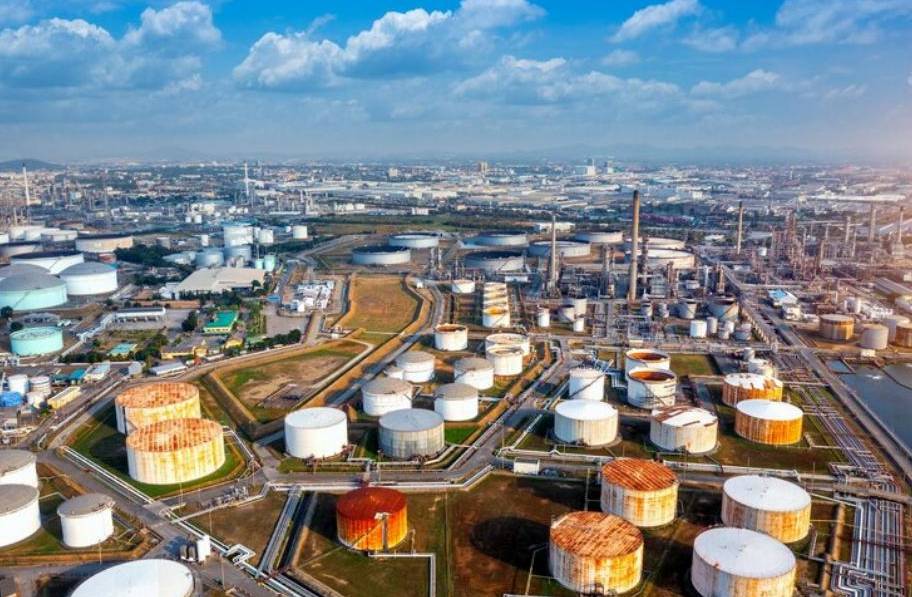
Global oil refining capacity hit around 103.5 million barrels per day by 2023, with top facilities driving energy supply amid peak demand pressures. These complexes process crude into fuels, petrochemicals, and more, influencing economics from trade balances to fuel prices. In 2026, expansions and maintenance shape their operations.
Oil Refineries Ranked by Capacity
India’s Jamnagar leads as the world’s largest single-site refinery at 1.24 million barrels per day (bpd), owned by Reliance Industries. Venezuela’s Paraguaná complex follows at 940,000 bpd, facing operational hurdles. South Korea’s Ulsan (SK Energy) processes 840,000 bpd with high efficiency.
| Rank | Refinery | Location | Capacity (bpd) | Owner |
|---|---|---|---|---|
| 1 | Jamnagar Refinery | India, Jamnagar | 1,240,000 | Reliance Industries |
| 2 | Paraguaná Refinery Complex | Venezuela, Punto Fijo | 940,000 | PDVSA |
| 3 | Ulsan Refinery | South Korea, Ulsan | 840,000 | SK Energy |
| 4 | Ruwais Refinery | UAE, Ruwais | 817,000 | ADNOC |
| 5 | Yeosu Refinery | South Korea, Yeosu | 730,000 | GS Caltex |
| 6 | Port Arthur Refinery | USA, Texas | 730,000 | Saudi Aramco |
| 7 | Onsan Refinery | South Korea, Ulsan | 669,000 | S-Oil |
| 8 | Dangote Refinery | Nigeria, Lekki | 650,000 | Dangote Group |
| 9 | Galveston Bay Refinery | USA, Texas City | 631,000 | Marathon Petroleum |
| 10 | Port Arthur (alt list) or Al Zour | USA/Kuwait | 615,000-630,000 | Motiva/Saudi Aramco |
Full top 10 lists converge on Jamnagar’s dominance, but rankings beyond top 3 fluctuate; U.S. sites like Galveston Bay (631,000 bpd, Marathon) and Beaumont (630,000 bpd, ExxonMobil) rank high.
Note: Rankings align across sources like Wikipedia and industry posts, though exact 9-10 vary slightly by complex definitions.
Largest Development
Jamnagar integrates advanced petrochemicals, boosting export revenues amid Asia’s demand surge. Paraguaná grapples with sanctions, limiting output despite scale. Ulsan maintains steady runs in a sector facing 890,000 bpd global closures in 2025.ExxonMobil’s Beaumont schedules Q1 2026 turnarounds on its 180,000 bpd crude unit, signaling maintenance for peak season. Nigeria’s Dangote Refinery ramps to 650,000 bpd with expansions targeting 1.4 million bpd, eyeing Africa’s fuel independence. Global outages hit 7.8 million bpd in late 2025, with Asia and Middle East projects offsetting declines.
Economic Impact
These refineries stabilize supply chains, with U.S. Gulf Coast hubs like Galveston Bay supporting North American economics. Venezuela and India’s giants influence oil trade flows, while upgrades like Bahrain’s Sitra (expanding to 379,000 bpd) lift diesel yields by 12%. In 2026, maintenance and geopolitics will sway refining margins and energy prices.